
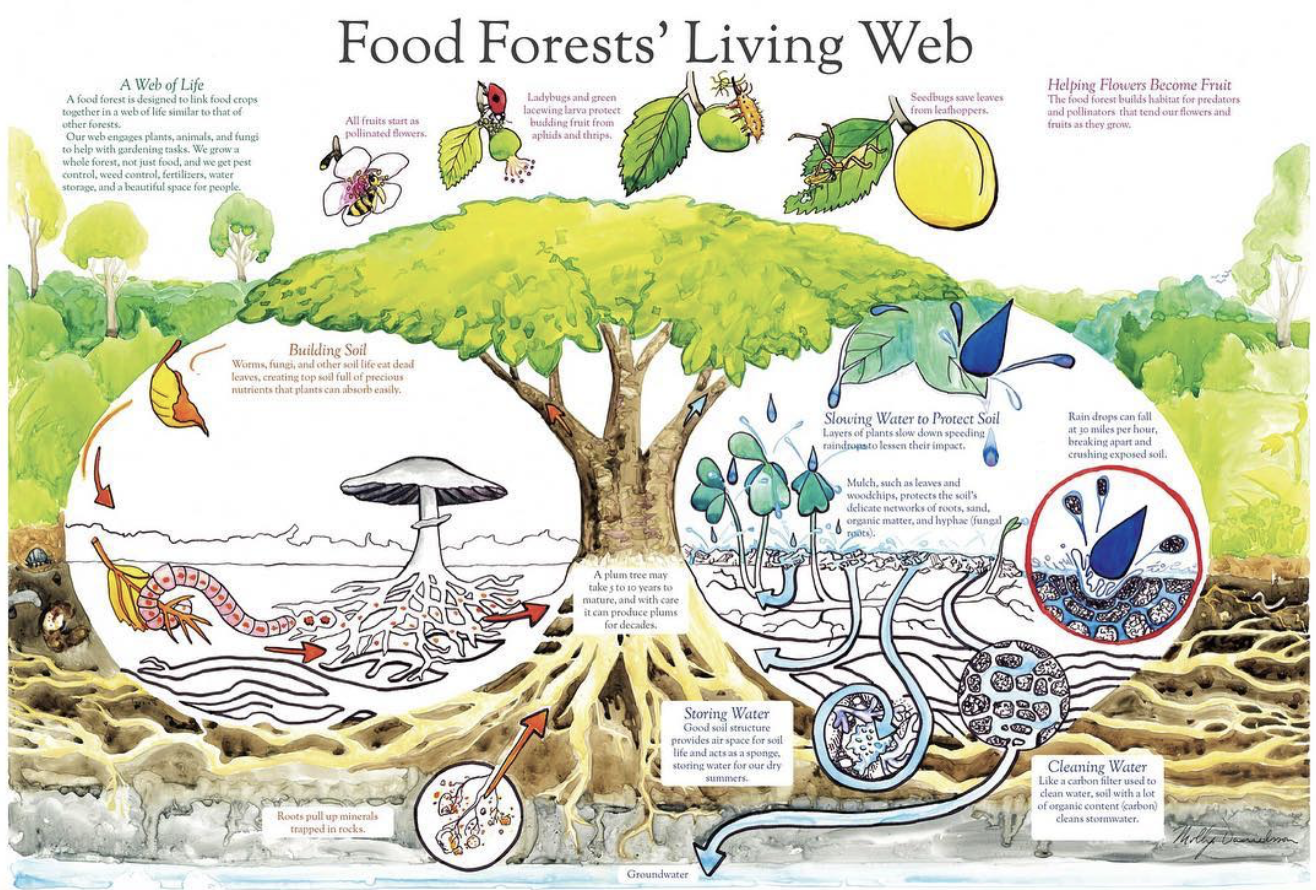
A food forest is a designed, multi-layered garden that mimics the structure of a natural forest while producing edible crops. Instead of rows of annual vegetables, it combines fruit and nut trees, shrubs, herbs, groundcovers, and vines that grow together in a self-supporting ecosystem. By stacking plants in layers and choosing species that benefit one another, food forests improve soil health, conserve water, support pollinators, and produce food year after year with minimal disturbance.
For example, a food forest might include apple or hazelnut trees forming the canopy, berry bushes like currants or blueberries underneath, herbs such as mint or comfrey for soil health, edible groundcovers like strawberries, and climbing plants like grapes or beans. Another example could be a backyard system with a plum tree, surrounded by perennial vegetables like asparagus and artichokes, pollinator flowers, and nitrogen-fixing plants that naturally enrich the soil.
Food forests are important because they offer a more sustainable and environmentally beneficial way to grow food. Unlike conventional agriculture, they rely on perennials that don’t require frequent tilling, which helps prevent soil erosion and keeps carbon stored in the ground. Their diversity supports pollinators and wildlife, strengthens resilience to pests and climate shifts, and reduces the need for chemical inputs. By mimicking natural ecosystems, food forests help regenerate soil, improve water retention, and contribute to carbon sequestration—making them a powerful tool for creating healthier, more climate-resilient communities.